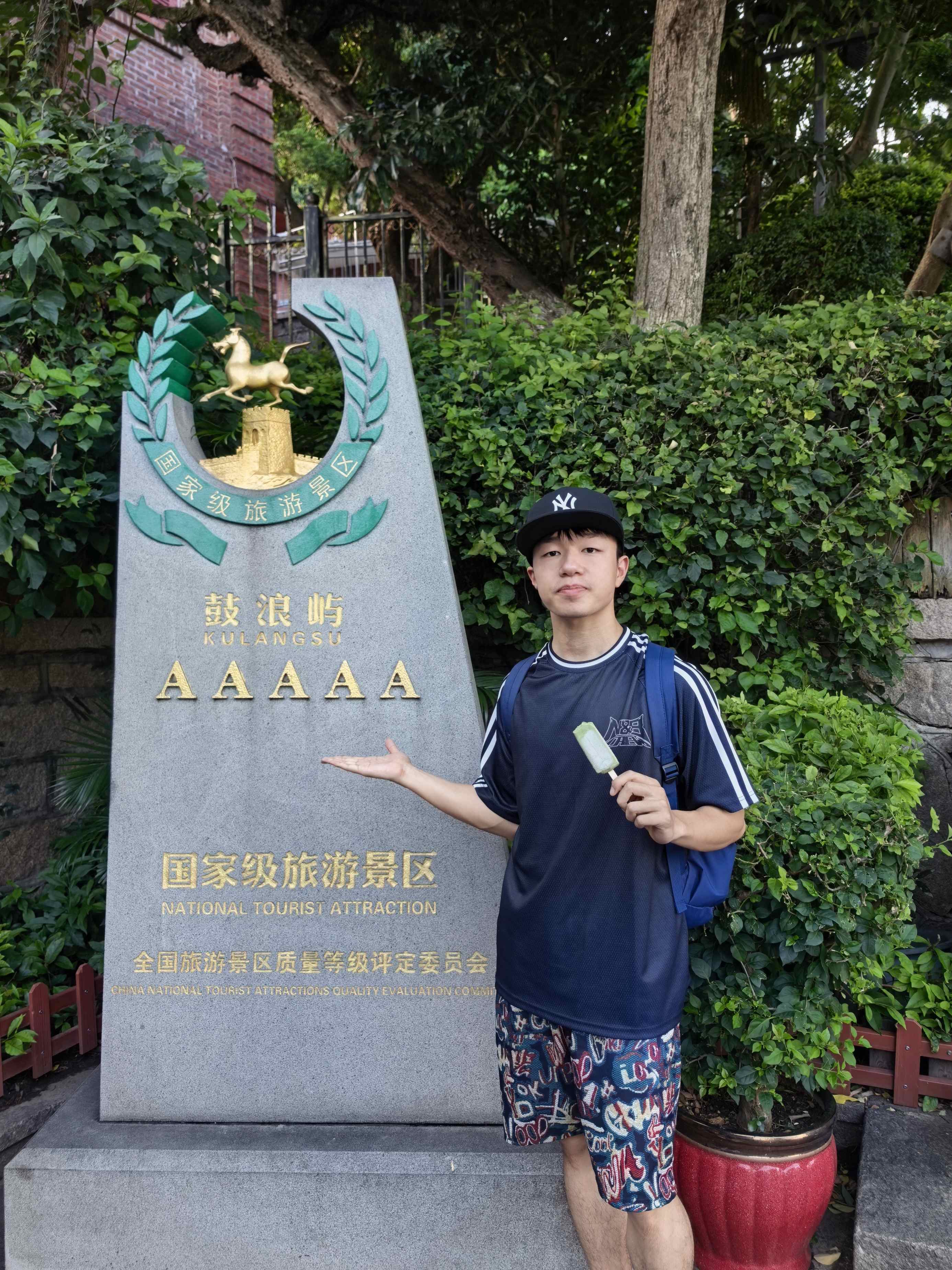
个人简介
曾锦文 ,男,汉族,南昌航空大学 环境与化学工程学院硕士研究生。2019年考入南昌航空大学给排水科学与工程 专业,2023年免试推荐至环境与化学工程学院环境科学与工程 专业攻读硕士学位。
曾获第十四届全国大学生节能减排社会实践与科技竞赛 全国三等奖、第七届江西省“互联网+”大学生创新创业大赛 铜奖等奖项;作为发明人之一参与“一种新型无水式节能厕所系统”等国家发明专利 ;以第一作者在《Environmental Functional Materials》发表研究论文。
研究方向为废水污染治理与环境功能材料,主要包括:
- 强酸废水重金属污染治理(胺类聚合物去除六价铬的质子增强机制)
- 机器学习辅助环境功能材料设计(基于机器学习指令定制化设计吸附材料)
- 碳基催化剂活化高价金属氧化物种(高级氧化水处理)
详见 About 。
Publications
Zeng J.,
Qin M.,
Jiang M.
Wang S.
Xie X.
Li L.
Ren W.
Shao P.
Xiao X.
Luo X.
Tailor-made adsorbent materials on machine learning instructions for efficient purification of heavy metal contaminants in wastewater
Tailor-made adsorbent materials on machine learning instructions for efficient purification of heavy metal contaminants in wastewater
In
Environmental Functional Materials, 5: 26-42,
2026.
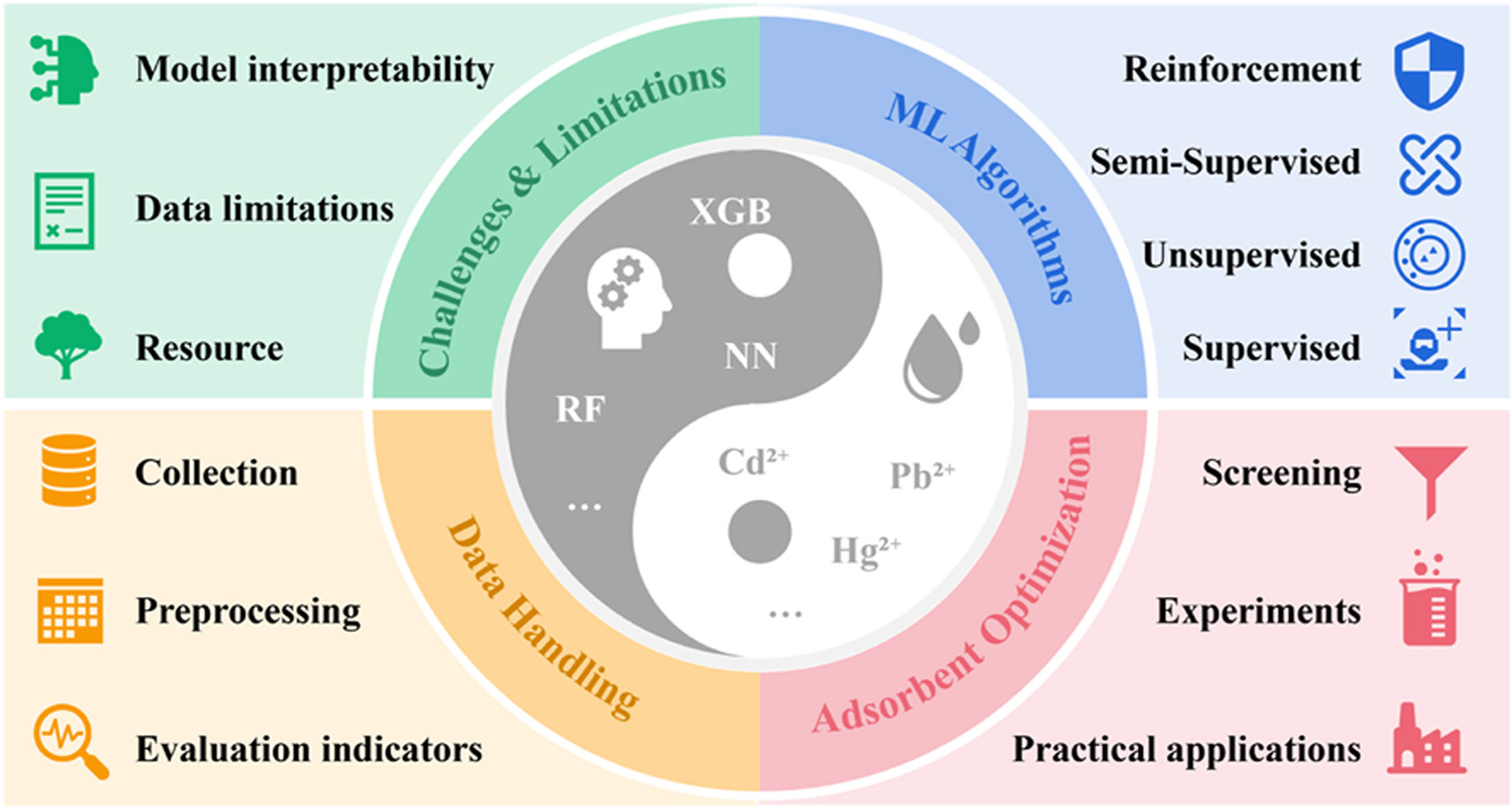
Heavy metal pollution is becoming an increasingly serious environmental and public health concern. As a result, developing efficient, cost-effective, and sustainable wastewater treatment technologies has become a pressing challenge. Adsorption technology has emerged as a promising solution due to its flexibility, simplicity, and economic advantages. However, conventional adsorbent design methods rely heavily on empirical approaches and trial-and-error experimentation, leading to inefficiencies and limitations. In recent years, machine learning (ML) has emerged as a powerful tool for accelerating material discovery and optimizing adsorption processes. This review provides a comprehensive analysis of ML applications in adsorbent material design, focusing on key algorithms, data-driven methodologies, and their role in improving adsorption performance. It explores innovative ML applications in developing high-performance adsorbents, emphasizing relevant data sources, feature engineering techniques, and preprocessing strategies critical for model accuracy. Additionally, we discuss the major challenges and limitations of integrating ML into adsorption studies, including data scarcity, model interpretability, and computational costs. Finally, we outline future research directions to advance the tailored design of adsorbent materials and foster the sustainable development of wastewater treatment technologies.
Fang L.,
Zeng J.,
Wang H.
He F.
Wan H.
Li M.
Ren W.
Ding L.
Yang L.
Luo X.
Insights into the proton-enhanced mechanism of hexavalent chromium removal by amine polymers in strong acid wastewater: Reduction of hexavalent chromium and sequestration of trivalent chromium
Insights into the proton-enhanced mechanism of hexavalent chromium removal by amine polymers in strong acid wastewater: Reduction of hexavalent chromium and sequestration of trivalent chromium
In
Journal of Colloid and Interface Science, 650(Pt A): 515-525,
2023.
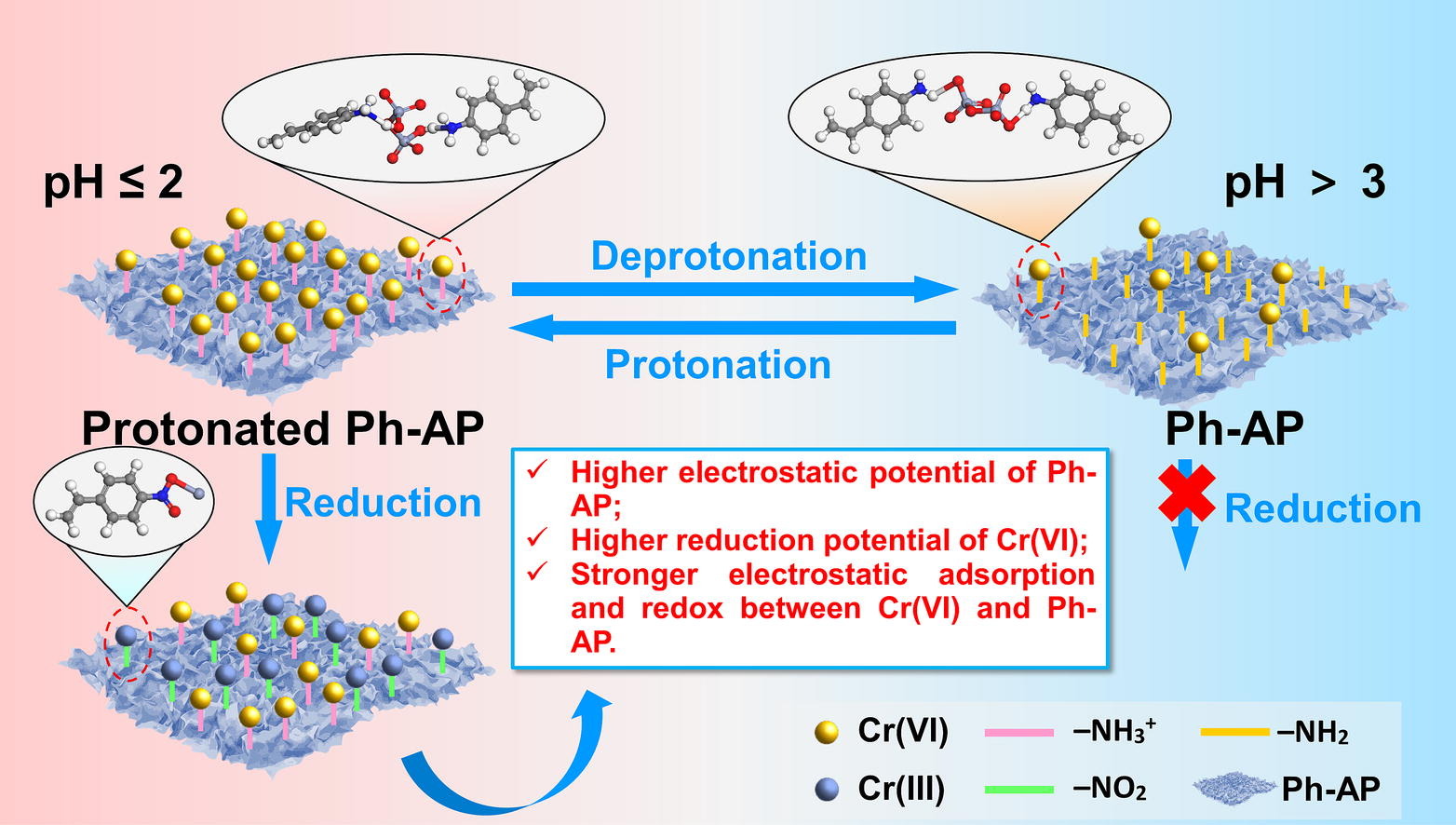
Adsorption is a green technology of treating heavy metal-contaminated strong acid wastewaters for the recycling of heavy metal and reuse of strong acid. Herein, three amine polymers (APs) with different alkalinities and electron donating abilities were prepared to investigate the adsorption-reduction processes of Cr(VI). It was found that the removal of Cr(VI) was controlled by the concentration of -NRH+ on the surface of APs at pH > 2, which relies on the alkalinity of APs. However, the high concentration of NRH+ significantly facilitated the adsorption of Cr(VI) on the surface of APs and accelerated the mass transfer between Cr(VI) and APs at strong acid environment (pH ≤ 2). More importantly, the reduction of Cr(VI) was enhanced at pH ≤ 2, due to the high reduction potential of Cr(VI) (E ≥ 0.437). The ratio of reduction to adsorption (α) of Cr(VI) was above 0.70, and the proportion of Cr(III) bonding on Ph-AP excessed 67.6 %. Finally, a proton-enhanced mechanism of Cr(VI) removal was verified by analyzing FTIR and XPS spectra as well as constructing DFT model. This study provides a theoretical basis for the removal of Cr(VI) in the strong acid wastewater.
Fan Y.,
Zhang Q.,
Peng Y.
Zeng J.
Ren W.
Xiao X.
Luo X.
Activation of high-valent metal oxidants on carbon catalysts: Mechanisms, applications and challenges
Activation of high-valent metal oxidants on carbon catalysts: Mechanisms, applications and challenges
In
ACS ES&T Engineering, 5(6): 1338-1356,
2025.
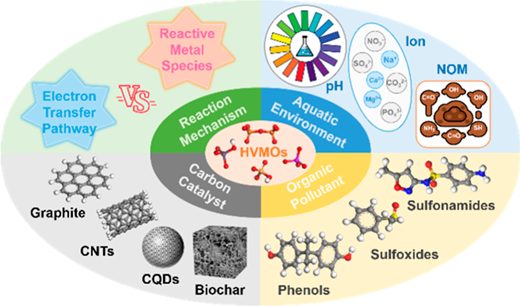
High-valent metal oxidants (HVMOs) have attracted considerable attention in advanced oxidation processes (AOPs) due to their high selectivity for oxidizing organic pollutants. However, the pursuit of green and efficient activators, together with the clarification of external factors affecting HVMO performance, remains a major challenge in practical applications. In this review, we present a comprehensive overview of the chemical properties of HVMOs, with a particular emphasis on their oxidation characteristics, focusing on permanganate (MnO4–), ferrate (FeO4–), dichromate (Cr2O72–). We further analyze energy changes and redox potential variations during the oxidation process. Recent advances in the activation of HVMOs by metal-free carbon materials are summarized, and the potential effects of common coexisting substances in environmental matrices, such as H+, OH–, inorganic anions, metal ions, and natural organic matter (NOM), are critically examined. Moreover, potential risks associated with residual HVMOs after organic pollutant oxidation are discussed, along with relevant separation and purification strategies. This review aims to deepen the understanding of HVMOs in environmental catalysis, explore their potential for resource recovery, and provide perspectives on future research directions and practical applications.
Cite Tailor-made adsorbent materials on machine learning instructions for efficient purification of heavy metal contaminants in wastewater
Zeng J, Qin M, Jiang M, et al. Tailor-made adsorbent materials on machine learning instructions for efficient purification of heavy metal contaminants in wastewater[J]. Environmental Functional Materials, 2026, 5: 26-42.Cite Insights into the proton-enhanced mechanism of hexavalent chromium removal by amine polymers in strong acid wastewater: Reduction of hexavalent chromium and sequestration of trivalent chromium
Fang L, Zeng J, Wang H, et al. Insights into the proton-enhanced mechanism of hexavalent chromium removal by amine polymers in strong acid wastewater: Reduction of hexavalent chromium and sequestration of trivalent chromium[J]. Journal of Colloid and Interface Science, 2023, 650(Pt A): 515-525.Cite Activation of high-valent metal oxidants on carbon catalysts: Mechanisms, applications and challenges
Fan Y, Zhang Q, Peng Y, et al. Activation of high-valent metal oxidants on carbon catalysts: Mechanisms, applications and challenges[J]. ACS ES&T Engineering, 2025, 5(6): 1338-1356.